You know Montessori classrooms are different from most. You have likely heard the rumors: children run around doing whatever they please, or it is all play and no work. Perhaps you have heard the opposite: our structures are so rigid they stifle creativity and natural childhood behavior.
What is it really like?
We can practically guarantee that once you step inside a classroom for yourself, sit quietly in a corner, and observe the children and adults at work, your impressions will be transformed. We encourage families to do so whenever possible; our students are thoroughly accustomed to visitors, and we can provide guidance on how your presence can be unobtrusive to them but highly informative for you. We hope you will schedule a visit soon if you have never been, or even if it has just been a while.
In the meantime, this post will give you a clear picture of what you will see during a typical day at The T.E.C. Schools.
The Independence of Arrival
From the moment they step in the door, expectations are different for our students, starting right with our youngest children in Children's House. Children are responsible for hanging their own bags and coats on hooks. They learn to change their own shoes, as our classrooms require that children wear a pair of indoor shoes. This is done to keep our learning spaces clean, but also to give children a sense that their classroom is comfortable, respectful, and home-like.
Teachers greet students individually upon arrival. They make a point of shaking a child’s hand, looking them in the eye, and greeting them warmly by name. By doing this, we intentionally model polite human interactions. Before long, the children learn how to greet us back confidently, applying this skill naturally outside of school.
The Freedom of the Work Period
The morning work cycle is an absolute hallmark of the Montessori approach. We know that children need a longer, uninterrupted stretch of time to involve themselves deeply in independent learning, and we honor this by protecting this morning block.
The length of this session depends on the child's development. For children ages 3 and up in Children's House, the work period is typically three hours long. It is a bit shorter for our youngest toddlers, while our kindergarteners, Lower Elementary, Upper Elementary, and Middle School students often engage in a second dedicated work period in the afternoon.
During this time, children work independently or in small clusters while teachers deliver focused lessons. Sometimes it may look like a child is simply playing, but purposeful exploration is critical to concrete learning outcomes. Dr. Montessori developed her educational materials to appeal beautifully to a child's natural curiosity. What looks like a simple puzzle is actually a manipulative biology diagram. What looks like a chain of pretty colored beads is a brilliant tool for exploring complex mathematical concepts like squaring and cubing.
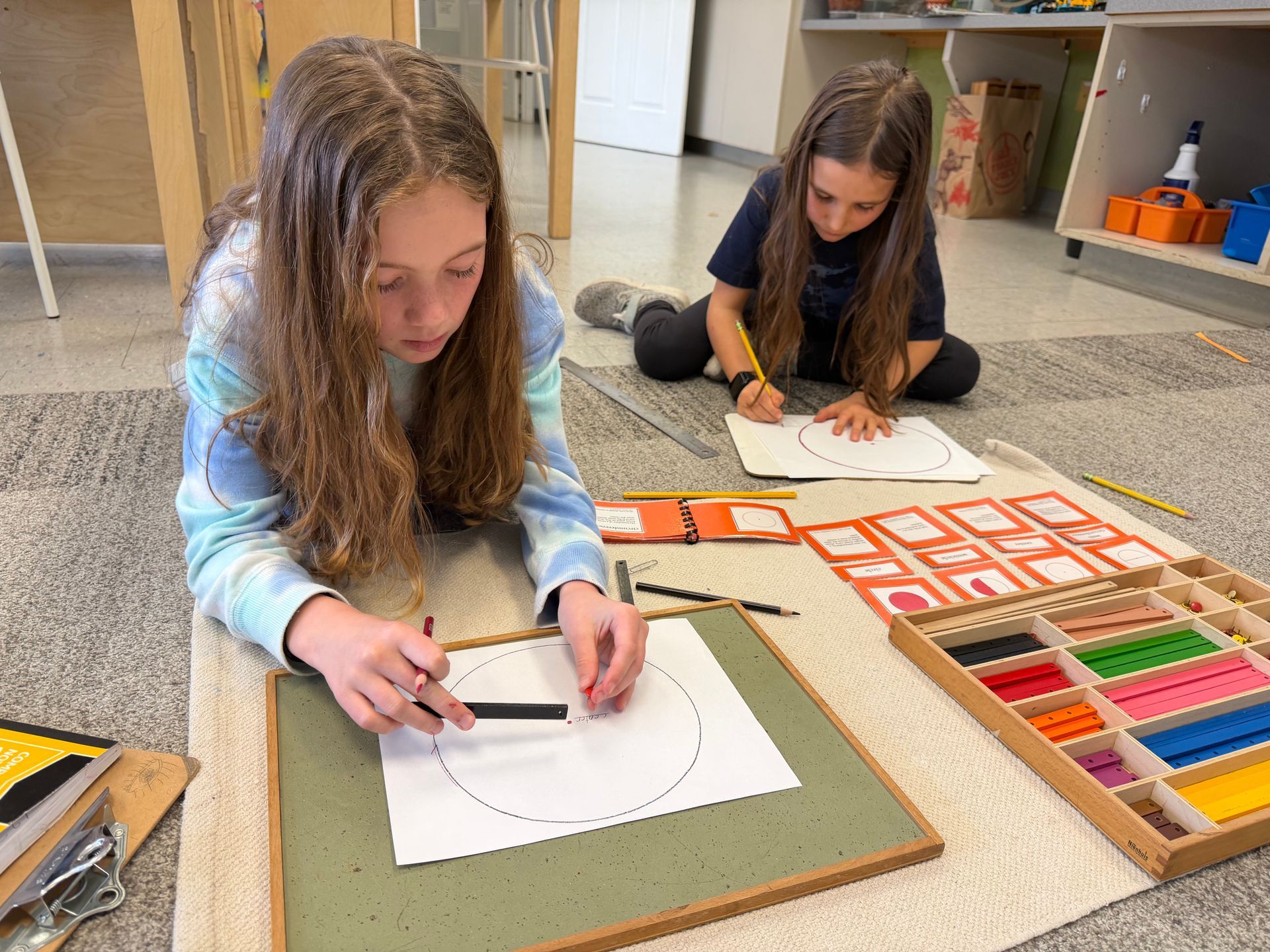
Our students have immense choice during this block. We allow freedom of movement, meaning they may sit where they like, stand and walk around the room if their bodies require a break, and use the restroom safely without needing an adult’s formal permission. We provide varied seating options as well. Some children prefer to work alone, others cooperatively; some like to sit at a table, while others work on a small mat on the floor. Adults appreciate autonomy in their workspaces, and we believe children deserve that same respect.
You might be surprised to see even very young children working deeply across advanced core subject areas:
- Mathematics and geometry
- Language and literacy mechanics
- Biology, botany, and zoology
- Geography and cultural studies
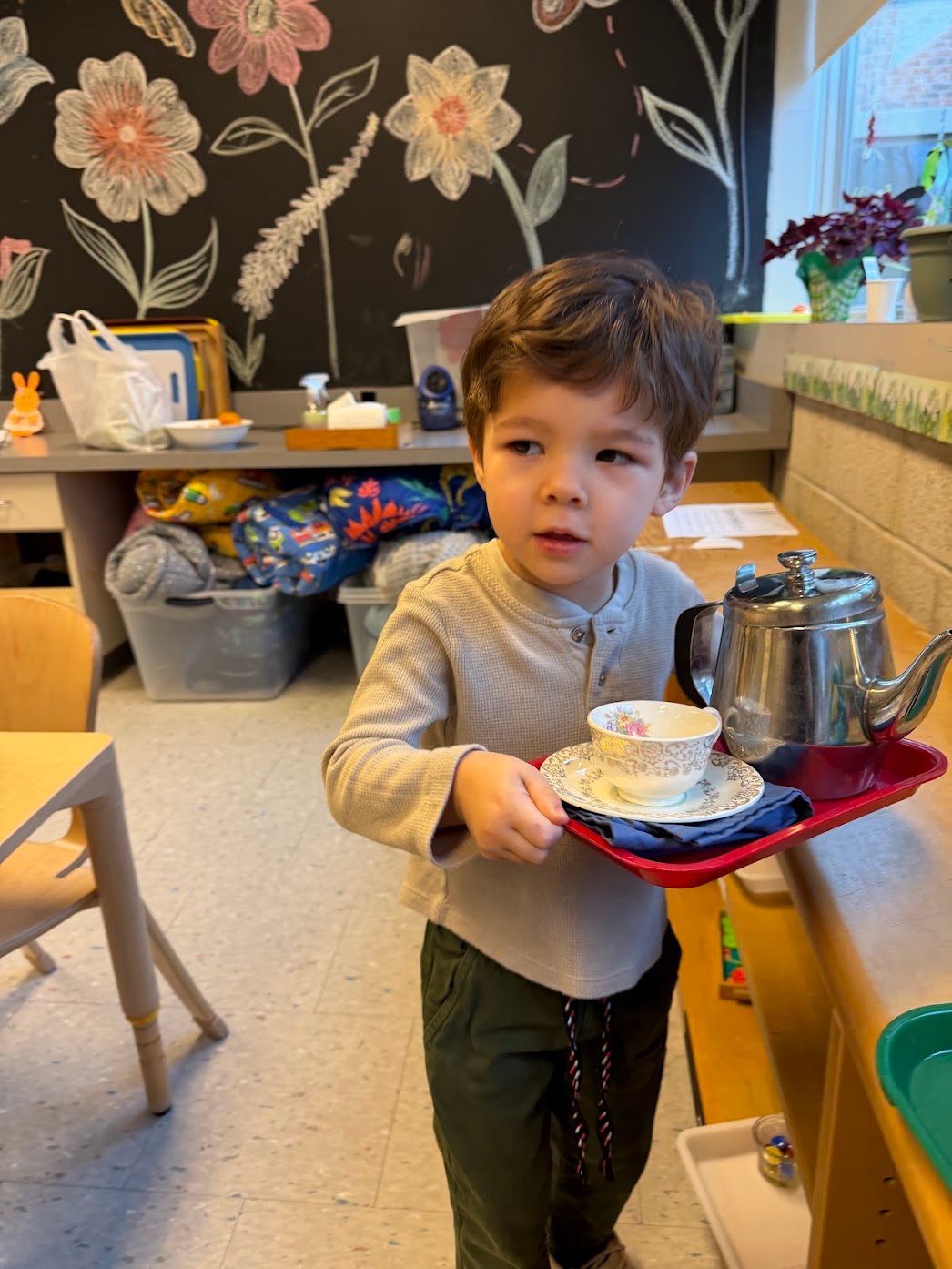
- Practical life skills (care of self and the environment)
Proactive Socializing and Conflict Resolution
Montessori education naturally nurtures the whole child, building intentional structures into our programs to support social development.
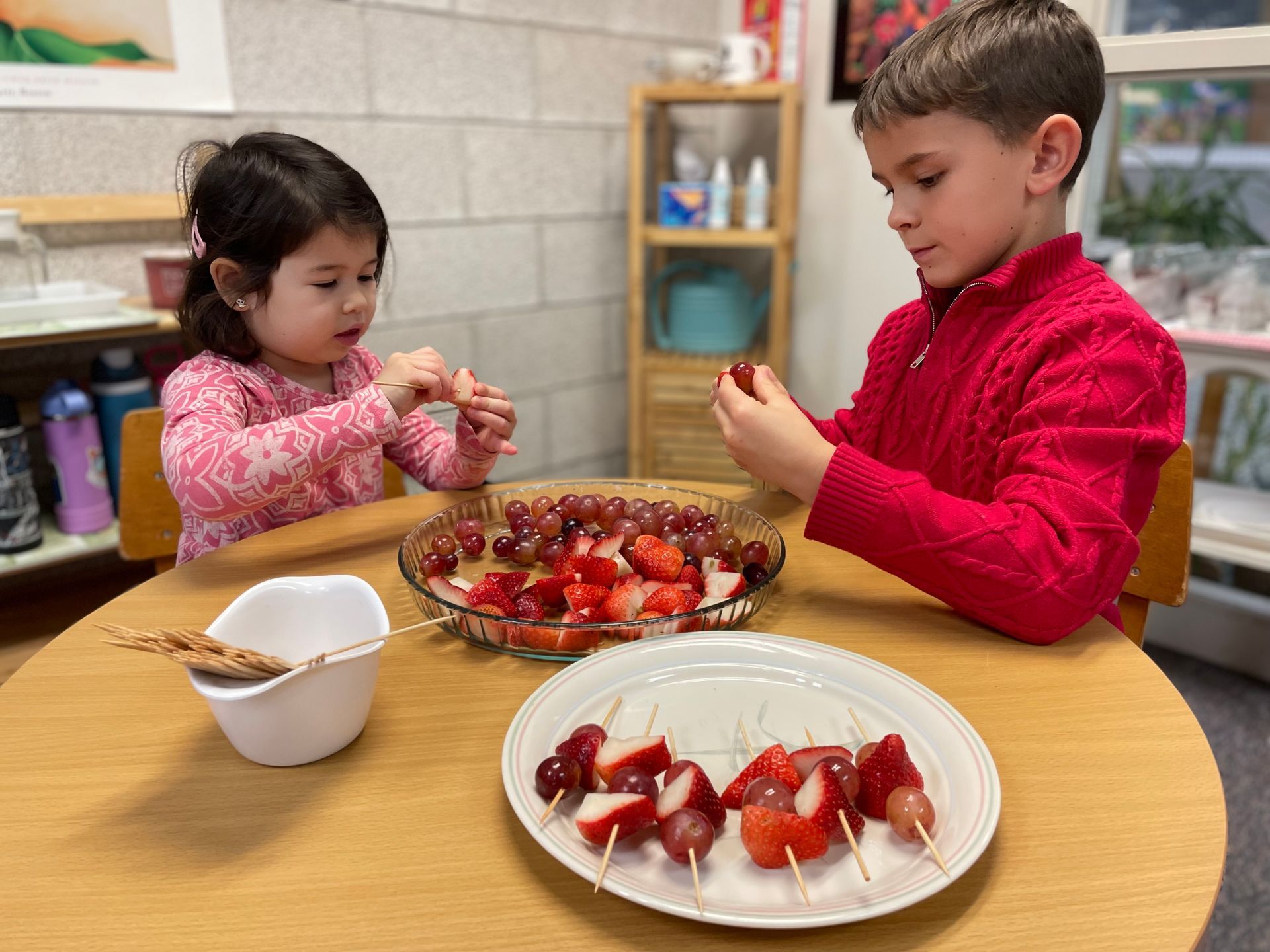
Our element of choice directly drives this growth. Rather than assigning seats or predetermining peer groups, we generally let children choose whether to work independently or cooperatively, and with whom. Because personalities naturally mix in different ways, teachers help children differentiate between what makes a focused, complementary work partner and what constitutes a fun, social friendship better suited for recess or Before & After School Care.
As children enter the elementary years, peer relationships become central to their development. Figuring out what healthy friendships look and feel like is a major developmental task for students in Lower and Upper Elementary. Attachments form, and children come to rely closely on one another. Naturally, social conflict arises from time to time.
One major benefit of our environment is that teachers set aside real time and space to help children navigate these moments. We teach mediation strategies, inclusivity, and proactive conflict resolution. We often use storytelling and targeted role-play to explore social dynamics safely. When children can look at a scenario objectively through a role-play exercise, they learn positive, repeatable approaches to resolving common real-world dilemmas.
The Dynamic Role of the Guide
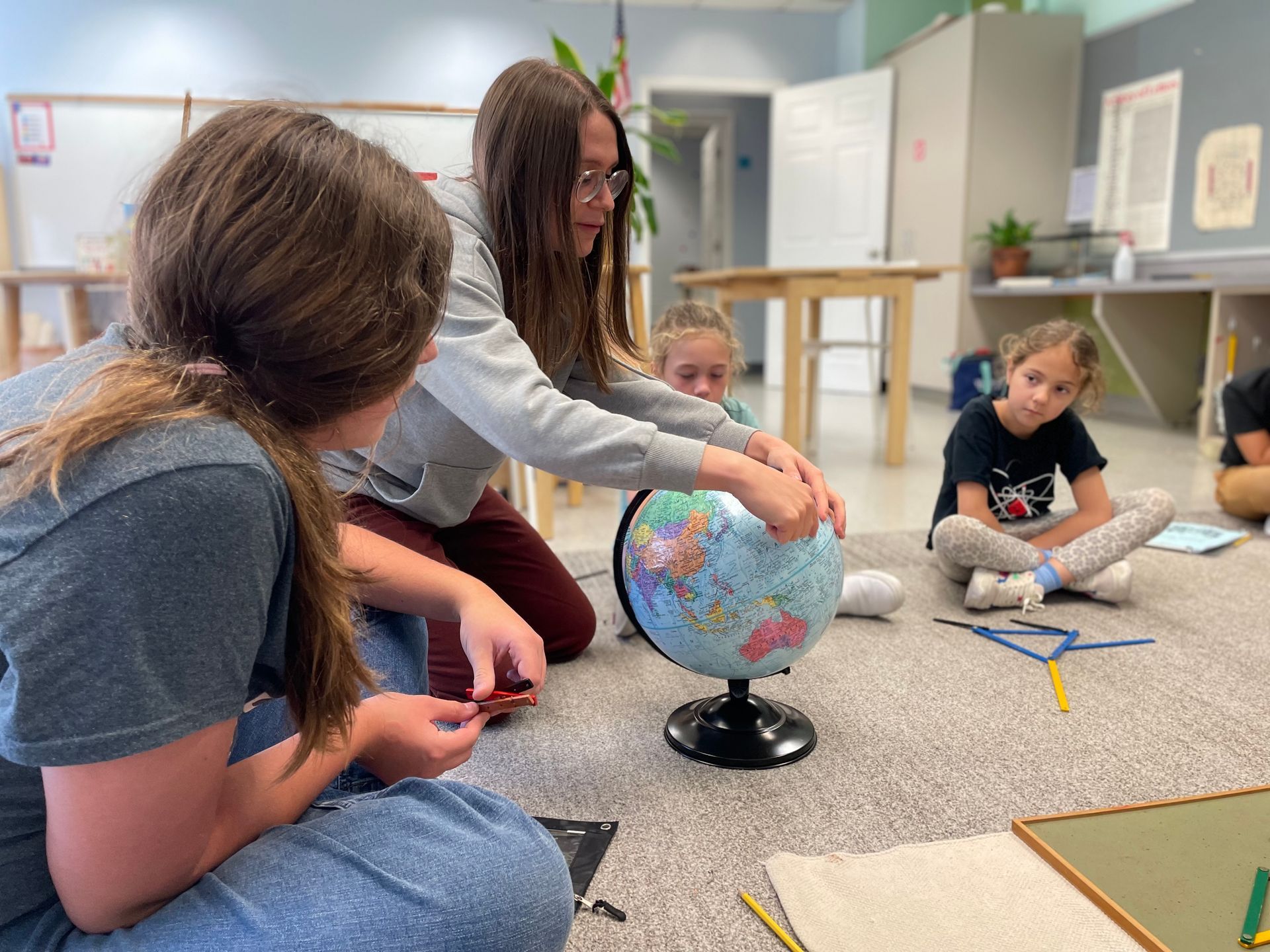
Another unique element of our classrooms is the role the adults play. We refer to our educators as guides rather than teachers, because the word perfectly describes the task. Instead of standing at a blackboard feeding children a stream of information to internalize, we lay a path before them, open the door, and give them the exact tools they need to explore and discover.
In the early years, lessons are usually given individually, allowing the guide to give their full attention to the child and honor their exact pace. In the elementary and middle school years, lessons shift primarily to small groups, honoring the students' developmental desire to collaborate and think alongside their peers.
A delicate task for any guide is knowing when to step in and assist, and when to step back and allow a child to find a solution independently. Generally, we choose to step back. We know that children are capable of far more than conventional systems credit them for, and given space, they rise to the occasion. This builds immense resilience, grit, and genuine confidence.
Lastly, the teacher/guide’s job is to observe. We watch the children closely to track which skills they have mastered, where they are progressing, and where they might need additional support. We take detailed notes to inform our instruction, record academic progress, and share clear insights with families. Guides are not the center of the classroom; we are there to support the child's natural path of learning.
See It in Action
Curious to see how this balance of freedom and order works in real life? We welcome you to experience it firsthand. Schedule an observation morning on our Worcester campus and see a high-fidelity classroom in action.