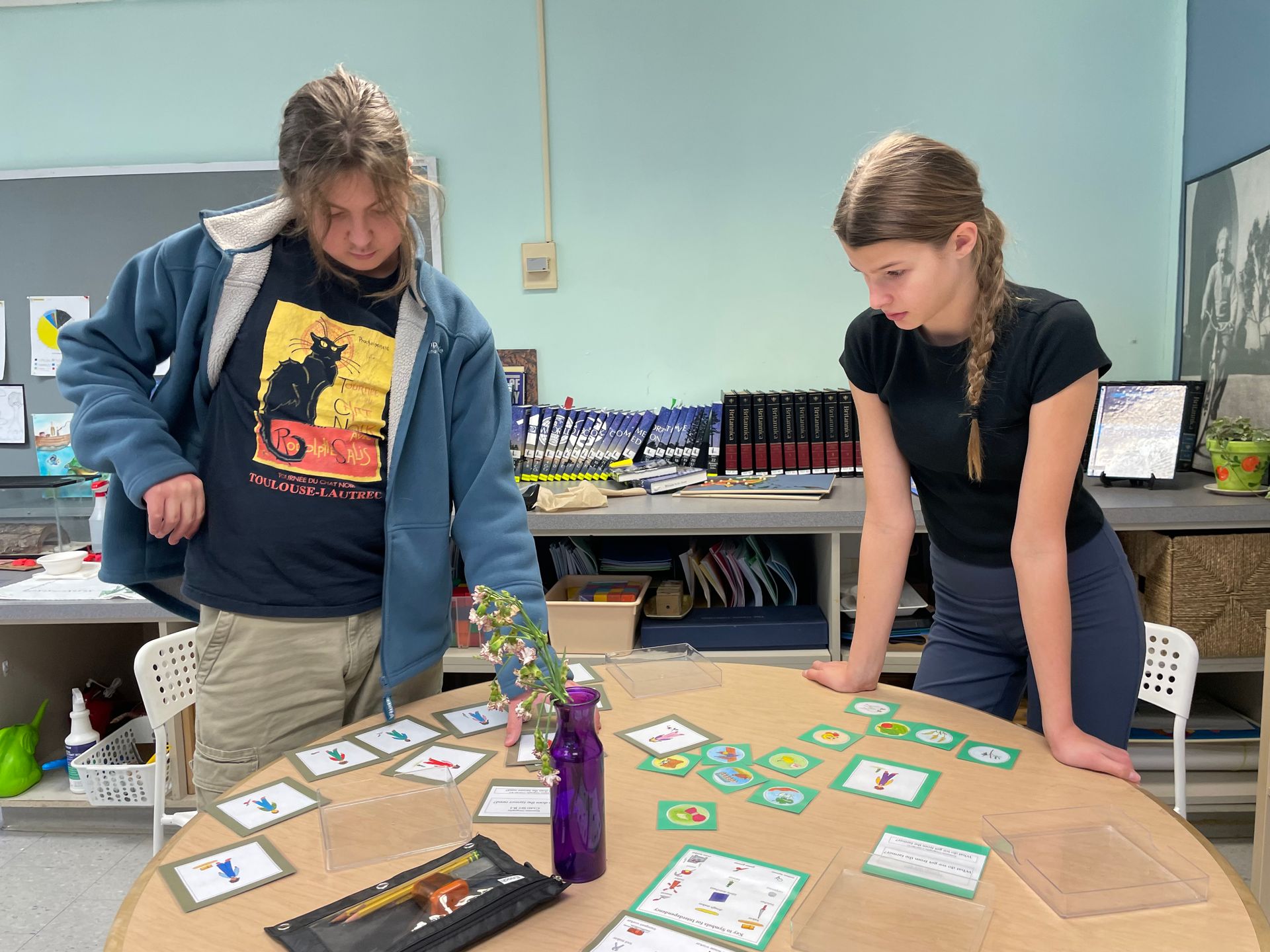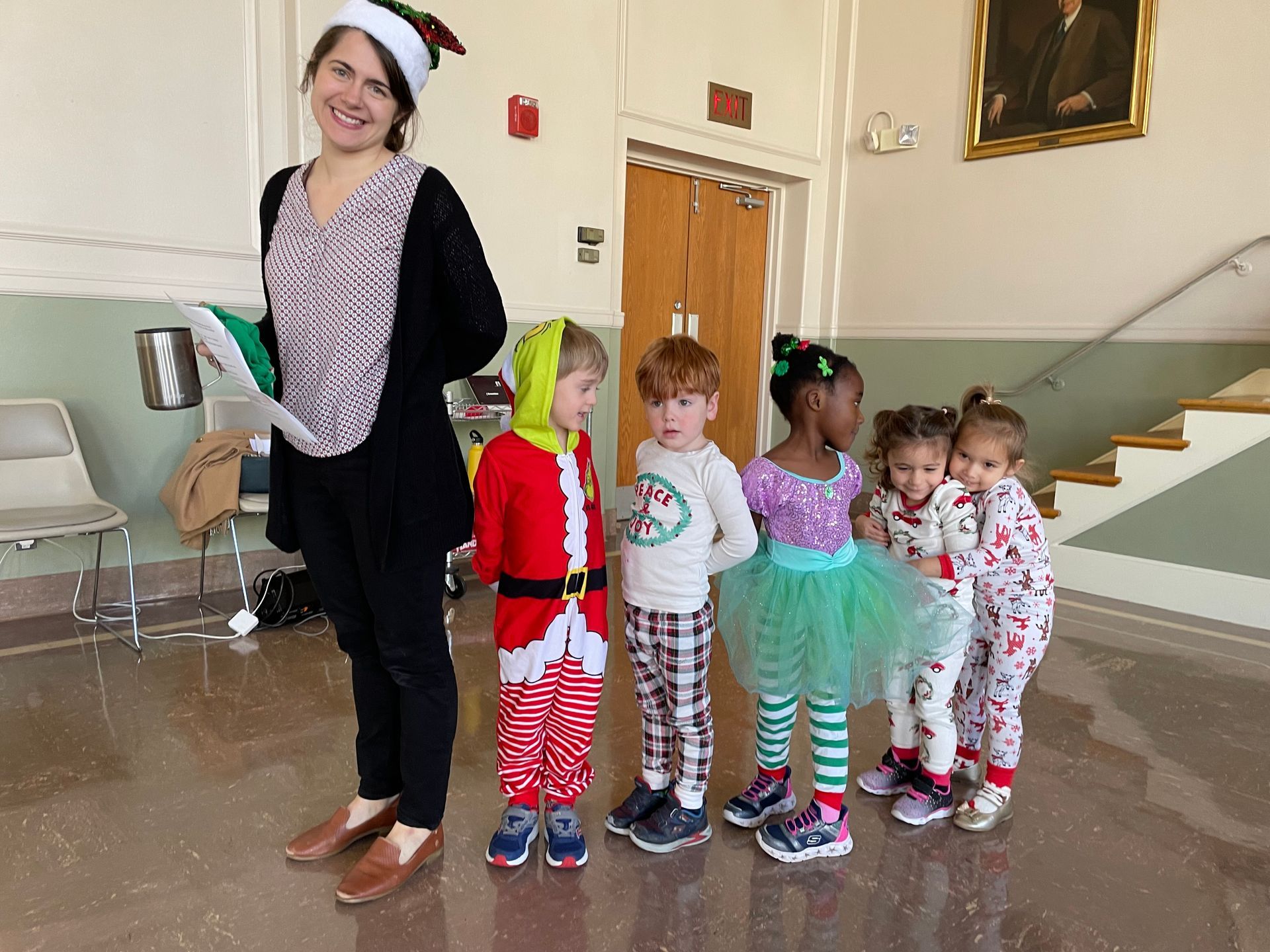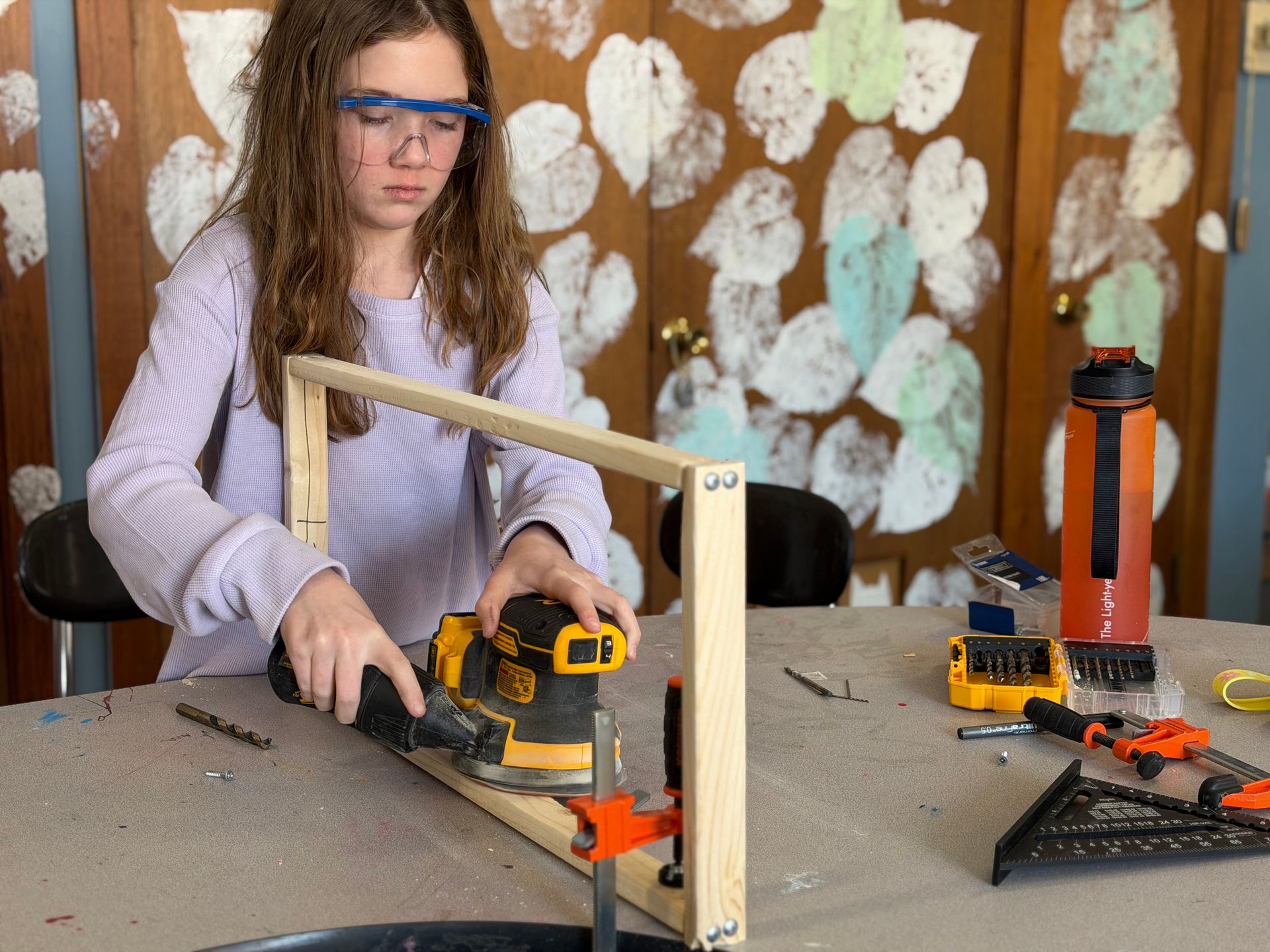
As we move into an increasingly unpredictable future, it becomes clearer every day that we must foster creativity, critical thinking, and innovation in children—rather than asking them to conform to standardized expectations. Montessori education has been cultivating these exact qualities for well over a century with extraordinary success.
If you have a quick five minutes, this brief video offers a wonderful summary of how a Montessori education prepares young minds for a changing world:
Watch the Video: Benefits of a Montessori Education
Throughout history, countless visionary thinkers, leaders, and creators have credited their early Montessori foundation with shaping their success. Let’s look at how prominent individuals reflect these traits—and what these core principles look like every day in our classrooms at The T.E.C. Schools.
1. Curiosity: Storytelling and Self-Discovery
Gabriel García Márquez, Nobel laureate author of Love in the Time of Cholera and One Hundred Years of Solitude, was a Montessori child. He once shared:
"I do not believe there is a method better than Montessori for making children sensitive to the beauties of the world and awakening their curiosity regarding the secrets of life."
Rather than simply delivering passive facts to memorize, Montessori guides spark curiosity through rich, captivating stories about the physical world, inviting children into self-directed discovery.
In our Lower and Upper Elementary classrooms at The T.E.C. Schools, our Great Lessons serve as prime examples. The First Great Lesson introduces the origins of the universe through vivid demonstrations and storytelling. Children look forward to this narrative at the beginning of each year, gaining new depth of understanding as their cognitive development evolves. A guide might use this spark to launch deeper studies into astronomy, chemistry, geology, or physics—depending entirely on where the child’s curiosity leads.
2. Imagination: Seeds of Great Ideas
A common misconception is that Montessori discourages imagination. In reality, Dr. Maria Montessori observed that while young children naturally ground their early learning in reality, true imagination is the engine of human progress. In To Educate the Human Potential, she wrote:
"Human consciousness comes into the world as a flaming ball of imagination. Everything invented by human beings, physical or mental, is the fruit of someone’s imagination... Our aim therefore is not merely to make children understand, and still less to force them to memorize, but so to touch their imagination as to enthuse them to their inmost core."
In our classrooms—from Children's House up through Middle School—we don't limit learning to abstract worksheets. We give children concrete materials that allow them to visualize complex concepts firsthand. When a child grasps how things work in the physical world, their imagination flourishes, enabling them to design innovative solutions—a spirit displayed brilliantly every year during our campus STEAMFaire.
3. Internal Motivation: Freedom Within Limits
In Montessori environments, we intentionally refrain from using external rewards, sticker charts, or traditional letter grades to drive behavior. We want children to connect with their intrinsic desire to learn, build self-reliance, and trust their own capabilities.
Larry Page, co-founder of Google, frequently attributes his success to his early Montessori schooling:
"I think it was part of that training of not following rules or orders, and being self-motivated, questioning what’s going on in the world and doing things a little bit differently."
At The T.E.C. Schools, this intrinsic drive is cultivated through freedom within limits. Students choose their work, select their work spaces, manage their time, and collaborate with peers within a supportive, structured framework. This daily practice instills true self-discipline and decision-making skills that stay with them for life.
4. Leadership: Multi-Age Communities
Our classrooms are intentionally designed around multi-age groupings. This structure creates a natural continuum for leadership development. Younger children observe and learn from older mentors, while older students step naturally into roles as classroom leaders, modeling Grace & Courtesy and offering lessons to their peers.
Leadership in a Montessori setting isn't about being loud or assertive; it is about empathy, responsibility, and initiative. Reflecting on the impact of freedom and self-direction, Anne Sullivan, teacher to activist Helen Keller, wrote:
"Dr. Montessori learned, as I learned, and as every teacher must learn, that only through freedom can individuals develop self-control, self-dependence, will power, and initiative. There is no education except self-education."
5. A Lifelong Love of Learning: Driven by Passion
Our ultimate goal at The T.E.C. Schools is to nurture an enduring passion for discovery. When children are allowed to pursue their genuine interests, learning becomes a lifelong habit rather than a temporary task.
Consider world-renowned violinist Joshua Bell. As a four-year-old, he created his own stringed instrument using rubber bands stretched across open dresser drawers, sliding the drawers in and out to alter the pitch. Recognizing his innate creative drive, his parents enrolled him in a Montessori school.
Decades later, as part of a famous Washington Post experiment on human behavior, Bell played complex classical pieces incognito at a busy D.C. Metro station. You can watch a clip of that social experiment here:
Watch Joshua Bell's D.C. Metro Experiment
What drove a world-class musician to play in a subway station for commuters? The same intrinsic curiosity that led a four-year-old to stretch rubber bands across furniture: a deep, unquenchable desire to explore, test, and engage with the world.
Experience Innovation in Action
When we give children the room to Think critically, Explore independently, and Create purposefully, innovation becomes a natural outcome.
We invite you to see these principles in action at our campus in Worcester, MA. Contact our team today to
schedule a personal tour or observe a classroom environment!